
You may have heard people say that kids in martial arts learn discipline and respect. If you’re wondering if that’s code for a punitive vibe, strict rules, and no fun, no—that couldn’t be further from the truth. Done right, kids’ martial arts should be uplifting and inspiring.
One of the most important things we can do for the next generation is set them up for success through instilling confidence, self-awareness, and resilience.
Martial arts is a great way to build those qualities, along with focus, strength and discipline, teaching them things that go far beyond the academy walls.
From building cardio and technical skills to developing spatial awareness and social skills, martial arts helps put your kids in unique (and safe) situations that make them dig deep and discover strength they didn’t know they had.
Emotional Awareness
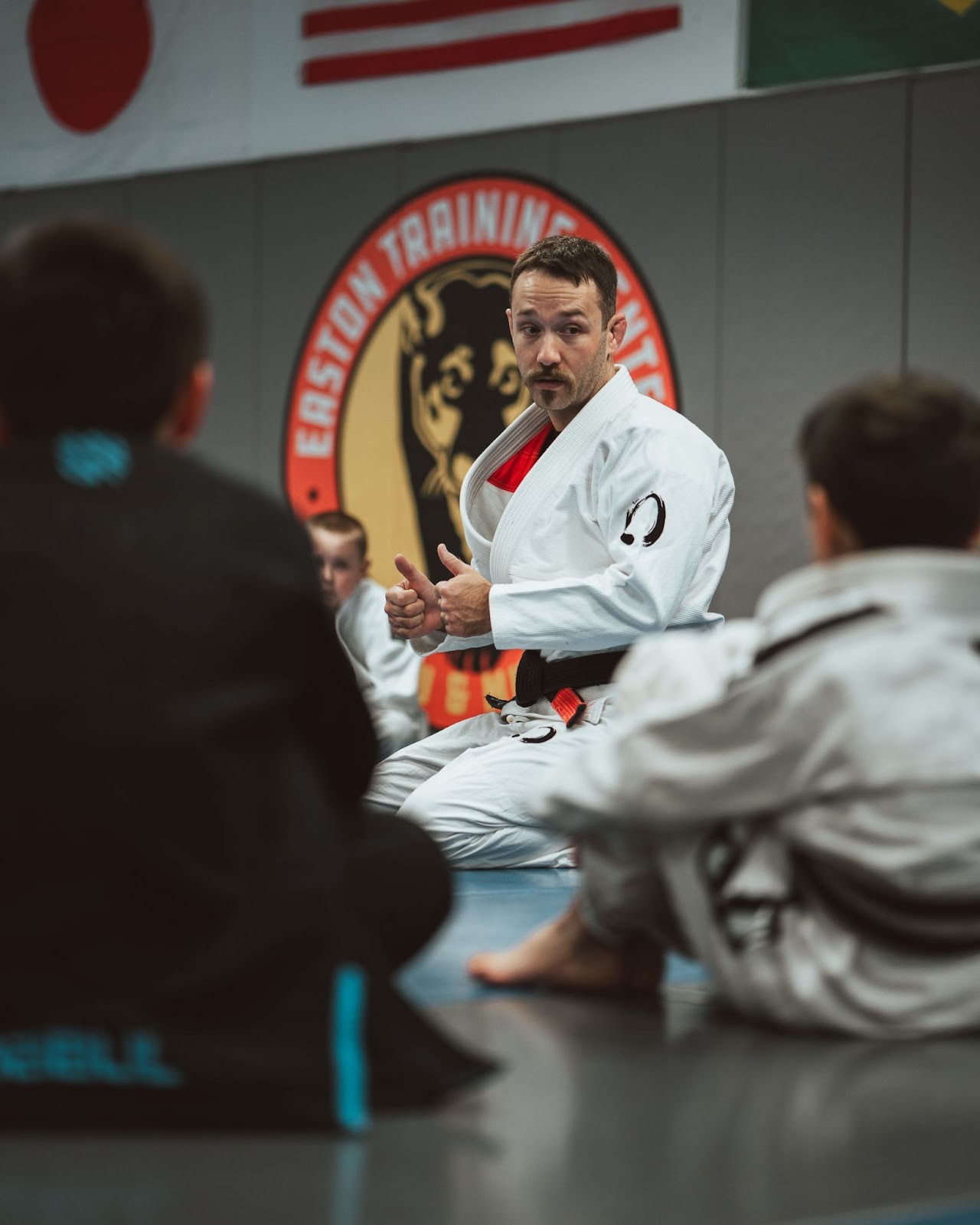
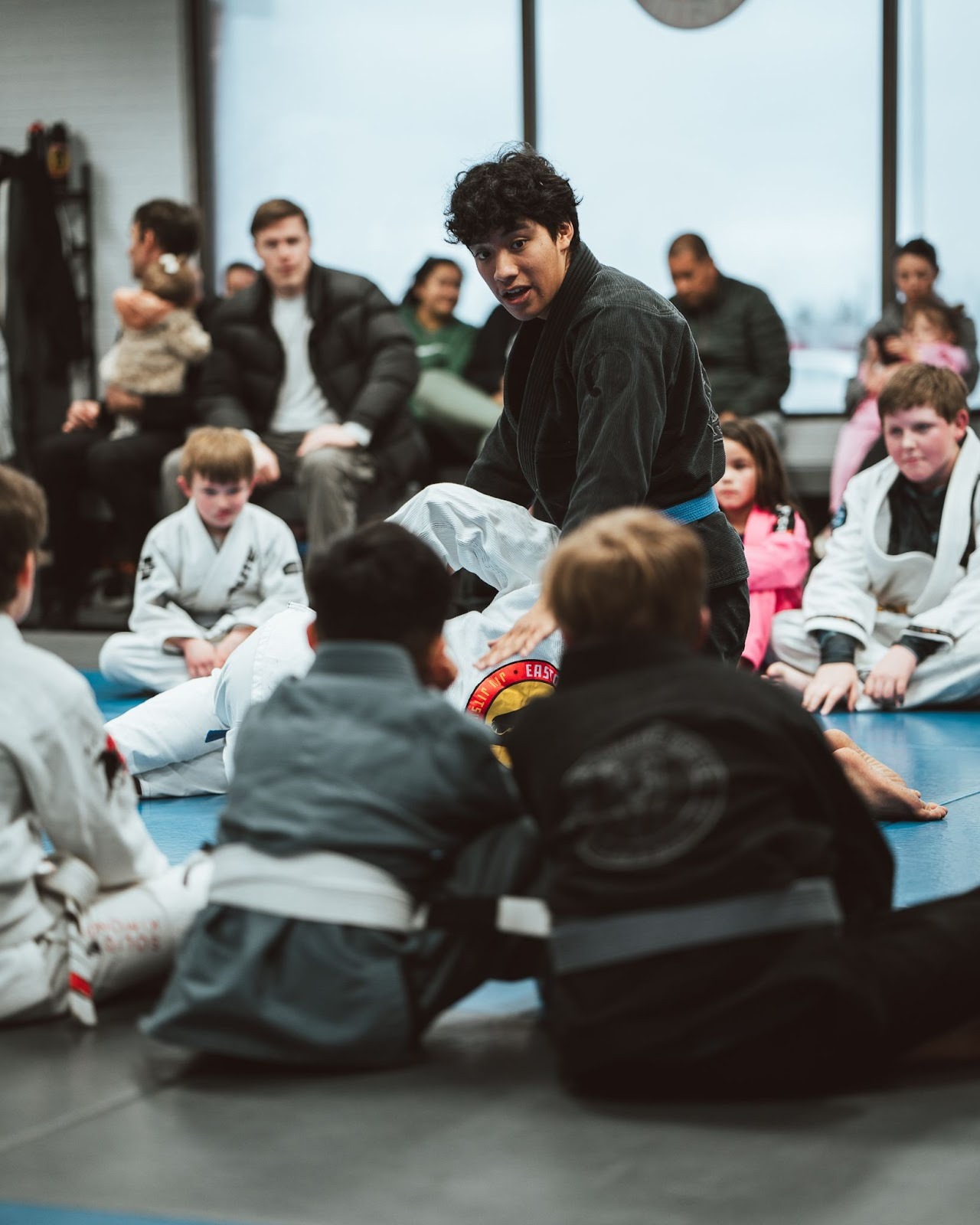
One of the most important parts of the kids martial arts program at Easton Training Center, where we teach kids both Brazilian Jiu Jitsu and Muay Thai, is taking the time to step back and connect with the kids.
As we teach them to use their bodies to defend themselves, we also want them to learn how to understand their emotions and use their words skillfully. We emphasize that while it’s great to know how to protect ourselves, ideally we always want to use words first to diffuse a situation.
At Easton, we create space for these sorts of discussions through dedicated “mat chats” at the start of each class. We use these opportunities to talk about things like hygiene, ownership, honesty, and our favorite acronym, F.R.E.D.–focus, respect, energy, and discipline.
By putting these important topics into a digestible format, kids come away with a bigger picture view and context for all the technical skills they’re learning.
Self-Confidence
We want to instill good values and teach our kids to discern right from wrong, but many external factors will shape their perception.
This becomes especially true when children go to school and experience society solo for the first time. Kids quickly learn from each other how to behave, what gets attention, and what’s considered “cool.”
Despite our efforts to make kids feel special and valued, negative experiences with peers can undermine those efforts. Feelings of not being enough can lead to acting out in class, skipping assignments, or developing a defensive attitude.
Can we blame them? Often, in bullying situations, children haven’t yet formed a strong sense of self or learned how to articulate their feelings.
While traumatic experiences like bullying can fragment the sense of self, movement-based activities like martial arts help reintegrate body and mind. As martial arts helps connect them to their bodies and build confidence, it leads to all-around improvement both at home and at school.
Martial arts teaches awareness of boundaries—where they end and another person begins. The strength they find in their own bodies becomes a powerful force field.
Beyond self-defense, martial arts instills values that transcend schoolyard drama. Kids learn respect, discipline, and how to be a good partner. In a martial arts setting, it’s “cool” to help others, make new kids feel welcome, and be someone’s favorite training partner.
As kids improve their self-image, their confidence blooms. They become clear on the standards they measure themselves against, carrying this self-assurance into all aspects of life. The discipline they develop helps them stay on top of homework, chores, and responsibilities while managing emotional responses more effectively. They’ll know how to handle bullying situations and when to involve an adult.
Martial arts isn’t a bandaid—it’s a lifelong journey. While it won’t “fix” everything, it equips kids with tools to navigate life more confidently. Feeling safe in the world starts with feeling safe in your own body.
Resilience
It’s frustrating when your child resists doing something you know is good for them. But there will almost certainly be days when they don’t want to come to class. The mentality behind martial arts can help them push though.Before we push or punish, one of the most important things we can do begins with validating their feelings. Kids, like adults, want to feel heard. If they resist, listen to their concerns without dismissing them. Maybe there’s someone in class they’re uncomfortable with or they’re feeling overwhelmed. Acknowledging their emotions can help you work together as a team rather than creating opposition.
Try reflecting on positive memories: remind your child of a time they resisted something but ended up loving it. Discomfort often feels bigger in the moment than the activity itself. Highlighting past successes can help shift their perspective and encourage them to give it a try.
Reinforce why they started. Did they want to compete, gain strength, or face challenges with confidence? Remind them that showing up, especially on hard days, builds the mental toughness they’ll need for competition and beyond.
If you train too, let them see your excitement. Share what you’ve learned and invite them to practice with you. Your enthusiasm may reignite their interest, showing them the joy that martial arts can bring beyond the structure of class.
Ultimately, the goal is to foster a positive relationship with the sport. Encourage structure and responsibility without pushing them so hard that they lose their love for the activity—or worse, feel resentment.
Overcoming Anxiety
It’s normal for kids to feel nervous before a big event, like a Brazilian Jiu Jitsu match. As a parent, it can be tough to watch, but when a kid is ready to compete, there are ways to help them manage their anxiety.
First, remind them to focus on the experience, not just the outcome. Winning is fun, but what matters most is participating and doing their best. Let them know that losing doesn’t make them a loser—it’s just part of the process, and they can learn from it.
Next, let them know that everyone gets nervous. Share a time when you felt nervous, too, to show them it’s normal. Even professional athletes like Steph Curry and Abby Wambach feel anxious before games, so they’re not alone in how they feel.Finally, try a simple breathing exercise to help calm their nerves. Inhale for 4 seconds, hold for 7, and exhale for 8. Doing this a few times can help them focus and feel more relaxed.
Most importantly, be supportive. Remind them how awesome they are for even competing, and cheer them on with pride, no matter the outcome.
Adapted from an article that originally appeared on Easton Training Center’s blog.
PHOTOS: COLLIN PERRYMAN